Mallorca Eclipse 2026: Everything You Need to Know About the Total Solar Eclipse
Mallorca Eclipse 2026 is already on the radar of travellers, astronomy enthusiasts and curious visitors who know this will be one of the most spectacular natural events visible in Europe for years. If you are here, you have probably heard about the total solar eclipse and are now looking for one reliable place where everything is explained clearly — from exact timings and best locations to practical advice on how to experience it without stress.
This guide is different.
At Click Mallorca, we live and work on the island year-round. We are not simply repeating astronomical data — we are actively preparing for the eclipse ourselves. We are already planning boat excursions to watch the eclipse from the sea, coordinating with local ports and captains, and welcoming groups who are travelling to Mallorca specifically for this event. That gives us first-hand insight into what is likely to happen on the island, from logistics and crowd movement to the most realistic viewing options.
More than just basic information, this guide is built around practical local knowledge. We explain where crowds are expected, which areas offer the clearest horizons, and why some viewpoints that look perfect on a map may not work in reality. We also share why Mallorca’s coastline, geography and summer conditions make it one of the most unique places in Europe to witness a total solar eclipse — especially as the sun sets over the Mediterranean.
What is a Solar Eclipse?
On 12 August 2026, Mallorca will experience a total solar eclipse during the final part of the day, as the sun slowly sets over the Mediterranean. This combination — a total eclipse happening at sunset — is what makes the event especially rare and visually powerful on the island.
As the moon moves in front of the sun, daylight will gradually fade, temperatures may drop slightly, and the atmosphere will change in a way that feels almost surreal. During the brief moment of totality, the sky will darken dramatically, the sun’s corona will become visible, and Mallorca will be plunged into an unusual twilight-like darkness — all while the sun is already low on the horizon.
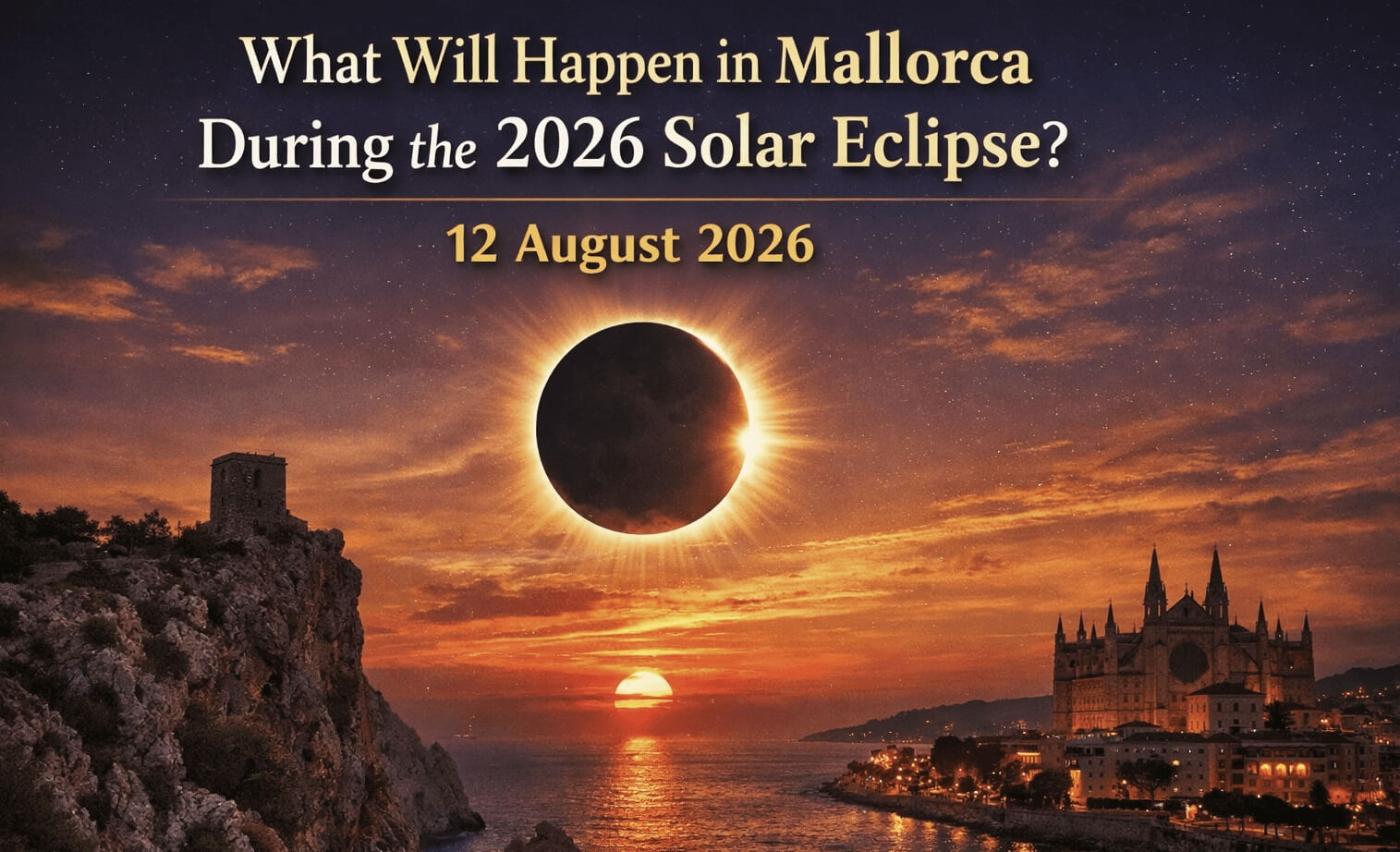
From a local perspective, this is an important detail: the eclipse will not happen high in the sky. Instead, the most critical moments will occur close to sunset, making a clear western horizon absolutely essential. Where you position yourself will strongly influence what you actually get to see.
Because of Mallorca’s geography, with mountains, cliffs, urban areas and varied coastlines, not all locations will offer the same experience. Some places will see the full sequence clearly, while others may lose sight of the sun too early due to terrain or buildings. This is why understanding the island’s layout — and not just the astronomical theory — is so important.
For locals, this eclipse is already seen as a major event. We expect increased traffic, busy viewpoints and a strong demand for locations with open views over the sea. Visitors who plan ahead and choose their viewing spot carefully will be rewarded with one of the most memorable natural spectacles Mallorca has seen in decades.
What Will Happen in Mallorca on 12 August 2026?
On Wednesday, 12 August 2026, a truly exceptional celestial event will unfold over the Mediterranean. This will not be a partial eclipse, but a total solar eclipse, with the Moon completely covering the Sun for a brief yet unforgettable period.
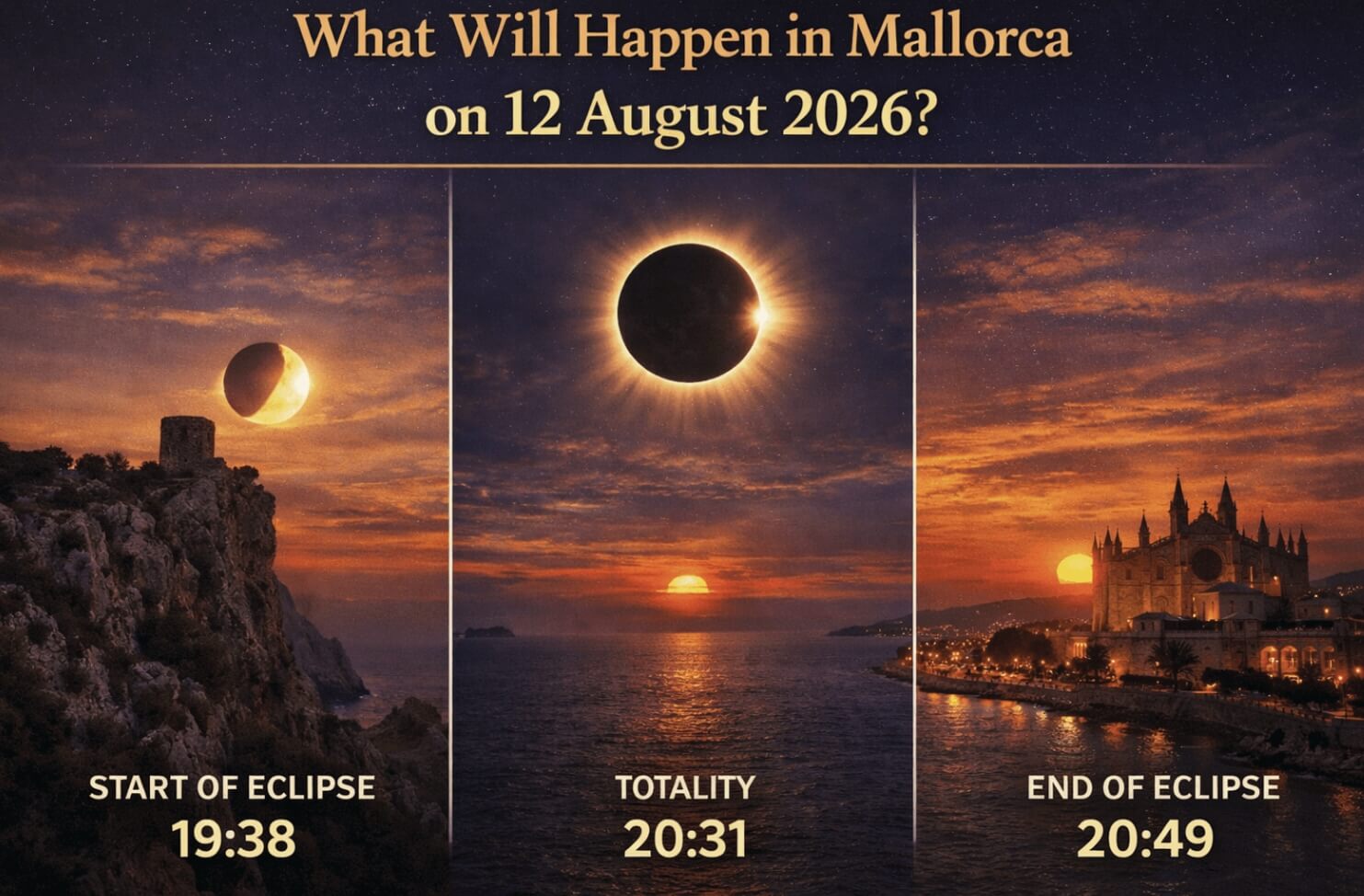
To plan your experience properly, it is essential to understand the key moments of the eclipse as they will occur in Mallorca:
- Start of the eclipse (partial phase): At approximately 19:38, the Moon will begin to slowly “bite” into the edge of the Sun. From this moment on, certified eclipse glasses (ISO 12312-2) will be required to observe the event safely.
- Totality – the peak moment: Around 20:31, the most dramatic phase will begin. The Moon will align perfectly with the Sun, plunging parts of Mallorca into sudden darkness for approximately 1 minute and 36 seconds. During this brief window, eclipse glasses can be removed and the solar corona can be observed with the naked eye. The light will change dramatically, temperatures may drop, and even animals may react to the sudden night-like conditions.
- End of the eclipse – eclipsed sunset: Shortly after totality, the Sun — still partially eclipsed — will set below the sea horizon at around 20:49. This will create an exceptionally rare sunset, combining the warm colours of dusk with the lingering shadow of the eclipse, a sight that will only be possible from locations with a clear western view.
This unique timing makes Mallorca one of the most extraordinary places in Europe to witness the 2026 total solar eclipse — provided you choose the right viewing location.
Boat Trips to Watch the 2026 Solar Eclipse in Mallorca
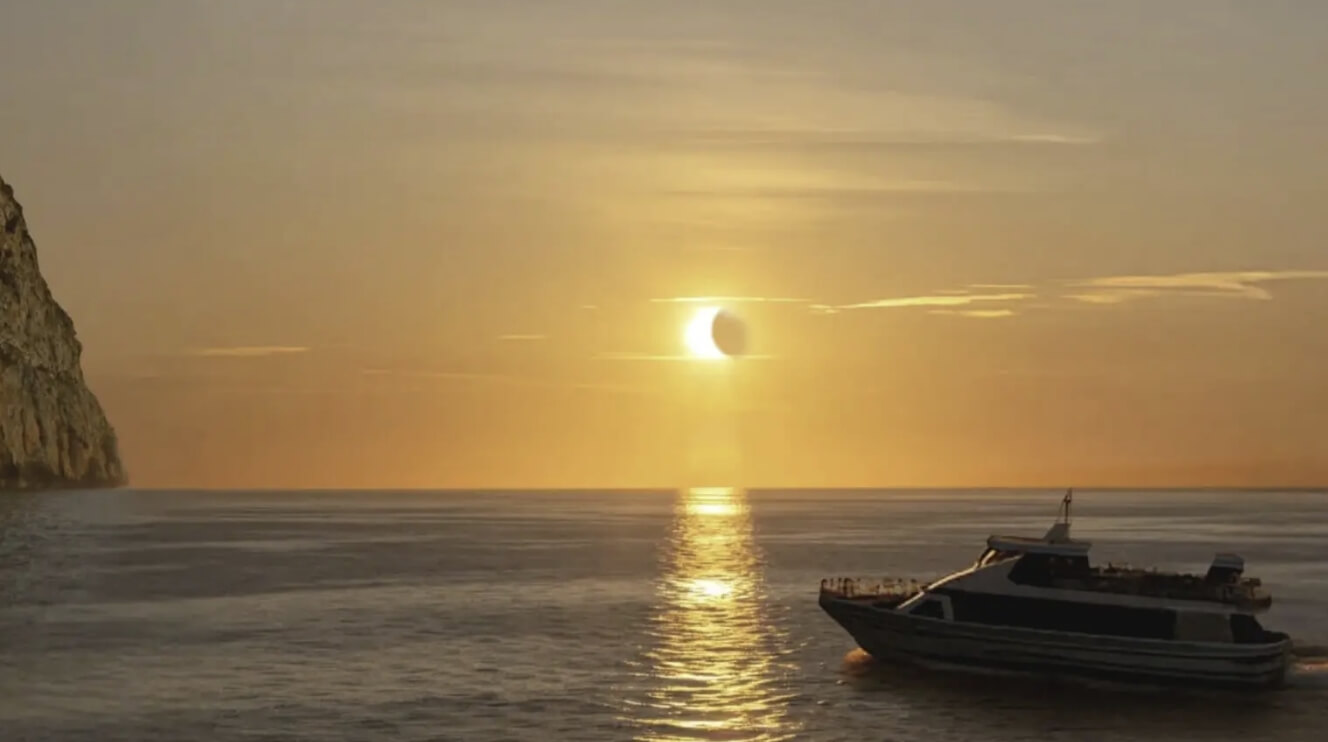
Watching the total solar eclipse from the sea has quickly become one of the most sought-after ways to experience the event, and availability is already extremely limited.
As of 10 March, many boat places are already sold out. Several international groups have been planning this eclipse for years and secured boats well in advance. For example, the Jumeirah Port Soller Hotel & Spa is hosting specialised astronomy groups travelling to Mallorca specifically for the eclipse, and multiple large vessels around the island have already been fully chartered for the event.
At this stage, only a very small number of options remain, and all of them require booking well in advance.
Current Boat Options (Very Limited Availability)
- Mallorca Eclipse 2026 Boat from Magaluf: Departures from Magaluf, cruising towards the southwest coast to enjoy unobstructed views of the horizon and one of the best sunset locations in Mallorca for witnessing the total solar eclipse.
If watching the eclipse from the sea is part of your plan, early reservation is absolutely essential. Many boats were fully booked more than two years in advance, and remaining places are expected to sell out well before 2026.
Waiting until the last moment will almost certainly mean missing out on this option altogether. Update: 6 March: At the moment, places are only available for departures from Santa Ponsa and Puerto de Alcúdia. If you are interested, please send us a WhatsApp message.
Date and Time of the Solar Eclipse in Mallorca (2026)
This solar eclipse will take place very late in the day, close to sunset, which makes precise timing essential. Below are the key facts you need to know if you want to plan where to be and what to expect. The timings and eclipse path are based on official astronomical data. You can consult the detailed eclipse visibility map provided by the National Solar Observatory for further reference.
When Will the Solar Eclipse Happen in Mallorca?
The solar eclipse will take place on Wednesday, 12 August 2026. It will be visible from Mallorca during the early evening, shortly before sunset.
What Time Will the Solar Eclipse Be Visible in Mallorca?
- Start of the eclipse (partial phase): around 19:38
- Totality: around 20:31
- Sunset / end of visibility: around 20:49
Because the eclipse reaches totality so close to sunset, a clear western horizon is essential to see the most important moments.
Will the Eclipse Be Total in Mallorca?
Yes. Mallorca will experience a total solar eclipse on 12 August 2026.
Totality will last approximately 1 minute and 36 seconds, during which daylight will briefly disappear and the Sun’s corona will be visible to the naked eye.
Best Areas in Mallorca for 100% Eclipse Visibility
Not all areas of Mallorca will offer the same viewing conditions during the 2026 total solar eclipse. According to analysis by local experts, the highest chance of seeing the eclipse at 100% totality is concentrated along specific coastal and elevated areas, especially where there is a completely unobstructed view of the western horizon.
The Serra de Tramuntana coastline stands out as the most favourable zone. Locations along this stretch benefit from direct views over the sea, with no buildings or terrain blocking the Sun as it sets. This coastal strip, running roughly from La Trapa to Cape Formentor, includes several natural viewpoints where totality is expected to be clearly visible.
Well-known coastal spots along this route include areas near Banyalbufar, Valldemossa, Deià, Port de Sóller and Sa Calobra, all of which face directly west and are free from urban light or structural obstacles. These locations combine elevation, open sea views and ideal orientation — key factors for observing a sunset eclipse.
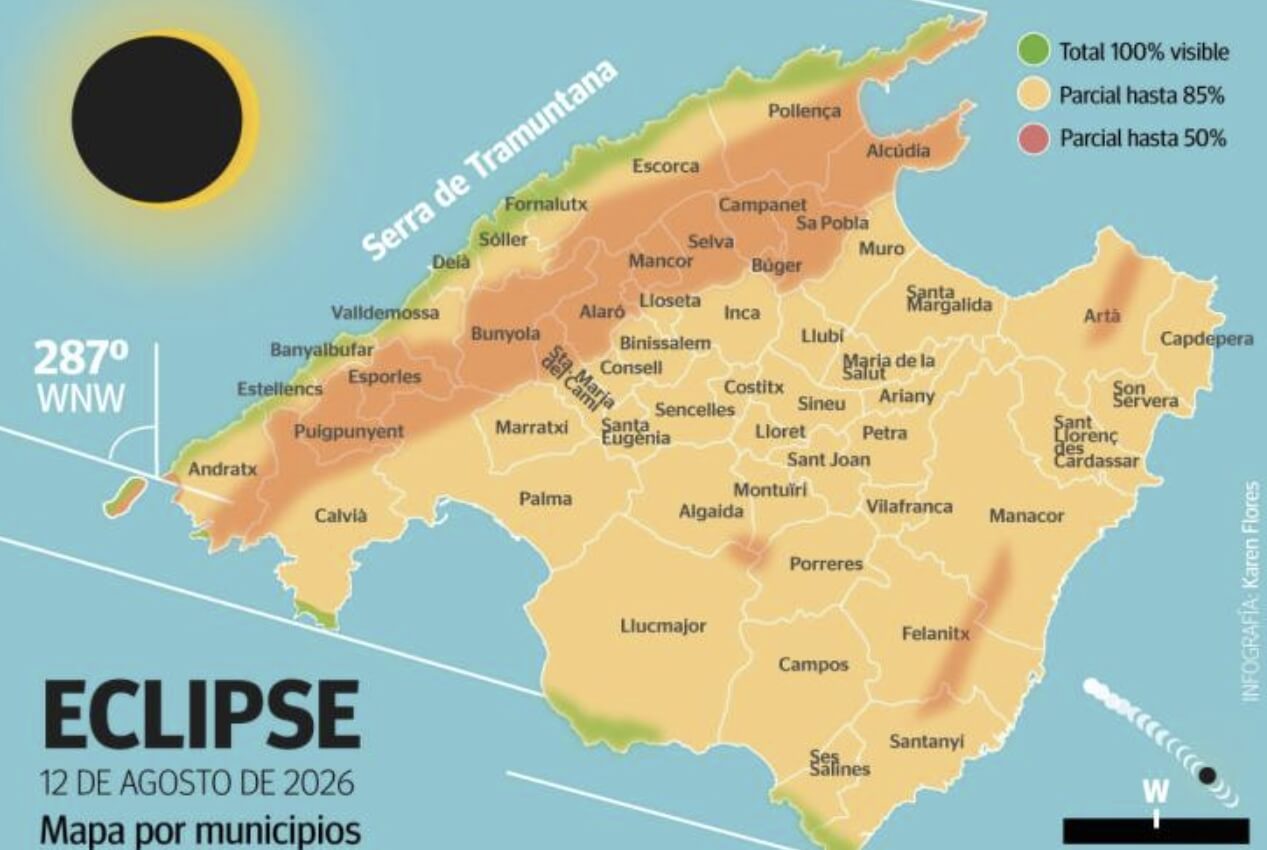
Outside the Tramuntana range, a few other coastal areas also offer good conditions, such as Andratx, El Toro and the Malgrats, Cap Blanc and Cap Salines, provided the horizon remains completely clear.
According to local astronomical assessments by the Fundación del Instituto de Astronomía y Astronáutica de Mallorca (FIAAM), Palma de Mallorca itself is not considered an ideal location for 100% visibility. While the eclipse will still be visible from the city, it is expected to be partial (around 85%) due to horizon obstructions and urban surroundings.
Some inland hills and viewpoints may also attract large numbers of observers because of their panoramic views. However, not all of them guarantee full visibility of totality, as terrain can block the Sun during its final descent. These areas are expected to experience significant crowding and traffic congestion, even if visibility is not optimal.
For this reason, choosing a location with a direct, unobstructed sea horizon remains the most reliable option for experiencing the total solar eclipse in Mallorca.
The Best Viewing Experience: Land or Sea?
Once you know when and where the eclipse will happen, the next key decision is how to experience it. In Mallorca, this comes down to two main options: watching the eclipse from land or from the sea. Both are possible, but the conditions and challenges are very different.
Watching the Eclipse from Land: What to Expect
Watching the eclipse from land, especially along the Serra de Tramuntana coastline, will be the most popular option — and also the most challenging.
Local authorities and experts are already expecting very large crowds in this area, particularly at coastal viewpoints with unobstructed views of the western horizon. The Departament de Carreteres del Consell and the Direcció General d’Emergències del Govern have been working together to anticipate measures that avoid traffic gridlock and ensure public safety.
In fact, this planning is part of the recently created Comissió per a la Gestió de les Actuacions Relacionades amb l’Eclipsi Solar Total de 2026, which includes representatives from the Balearic Government, island councils, local authorities, the University of the Balearic Islands (UIB) and astronomical associations. The regional Minister of the Presidency, Antònia Estarellas, has publicly acknowledged that temporary road closures may be necessary on the day of the eclipse to prevent traffic collapse in key areas.
This means that watching the eclipse from land may involve:
- Restricted or closed roads, particularly in the Serra de Tramuntana
- Heavy traffic and limited access to popular viewpoints
- The need to arrive very early and remain in place for several hours
- Limited flexibility once roads are closed
One alternative is staying overnight in tourist accommodations within the Tramuntana area, but for the eclipse dates availability is already extremely limited, and prices are expected to be significantly higher than usual.
Watching the Eclipse from the Sea: Clear Horizons and Open Views
Watching the eclipse from the sea offers a different set of advantages, especially when it comes to visibility and access.
From a boat, observers benefit from:
- A completely unobstructed view of the western horizon, essential for a sunset eclipse
- No road access issues or traffic restrictions
- The ability to position the vessel for the best possible angle as the Sun approaches the horizon
- Wide, open views over the Mediterranean, enhancing the visual impact of totality
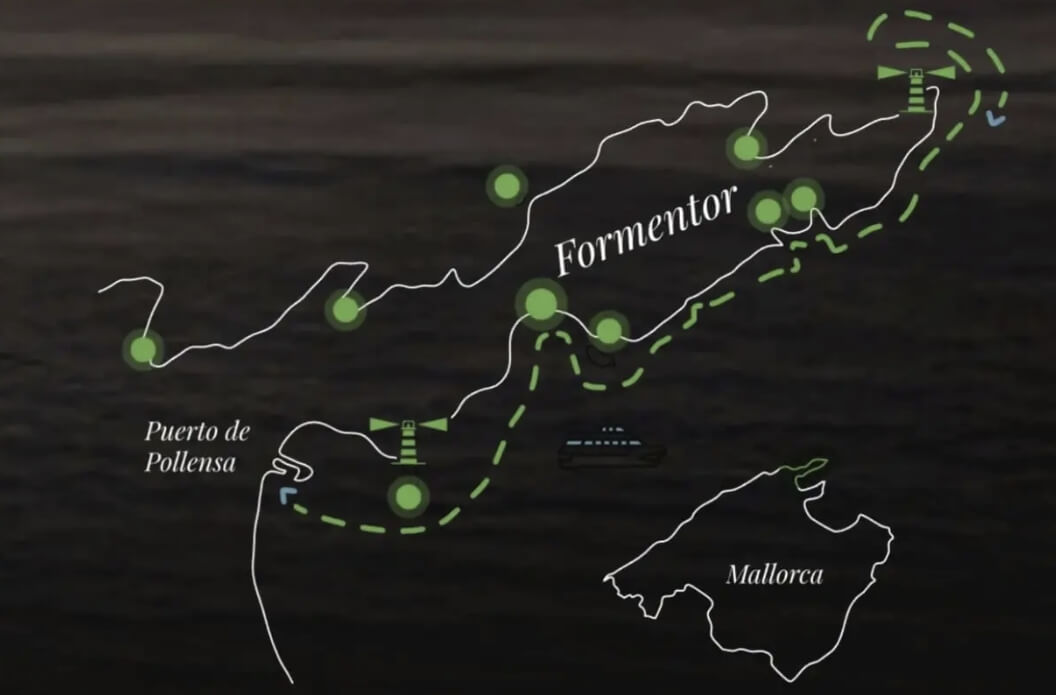
Boat departures are planned from ports such as Alcudia and Pollensa, navigating towards the Cape Formentor area, which is widely considered one of the best natural settings to witness the eclipse. While many boats are expected to be at sea, the experience remains focused on visibility, horizon clarity and positioning — factors that are difficult to guarantee from land.
Choosing the Right Option
Watching the eclipse from land can be rewarding, but it requires accepting crowds, access limitations and strict planning. Watching it from the sea removes many of the logistical challenges and offers consistently clear viewing conditions, especially for a sunset eclipse.
For visitors who want to focus on the experience rather than the logistics, understanding these differences early will make planning much easier.
How to Watch the Solar Eclipse Safely
Watching a solar eclipse is a unique experience, but it must always be done safely. Looking directly at the Sun without proper protection can cause serious and permanent eye damage.
To observe the eclipse, certified eclipse glasses are essential during all phases except totality. Make sure the glasses comply with the ISO 12312-2 international safety standard. Regular sunglasses, even very dark ones, do not offer adequate protection, and children should always be supervised when using eclipse glasses.
You can look at the eclipse without eye protection only during totality, when the Moon completely covers the Sun. In Mallorca, this moment will last approximately 1 minute and 36 seconds. As soon as the Sun begins to reappear, eclipse glasses must be put back on immediately.
Never look at the Sun through a camera, mobile phone, binoculars or a telescope unless they are fitted with a proper solar filter. Doing so can cause serious eye injury and permanent damage to your equipment.
A simple rule to remember: if any part of the Sun is visible, your eyes must be protected.
Mallorca and the 2026 Solar Eclipse: A Once-in-a-Lifetime Event
The total solar eclipse of 12 August 2026 will be one of the most extraordinary natural events ever visible from Mallorca. Its timing at sunset, combined with the island’s coastline and open Mediterranean horizons, makes this eclipse truly special — and impossible to replicate for decades.
Whether you choose to watch it from land or from the sea, planning ahead will be essential. Crowd management, traffic restrictions and limited availability of key viewing spots mean that spontaneous decisions are unlikely to deliver the best experience.
For those who prepare early, however, Mallorca offers a rare opportunity to witness totality in one of the most beautiful settings in Europe. The combination of science, nature and landscape will make this eclipse a defining moment for anyone lucky enough to be on the island that day.
If there is one piece of advice worth remembering: this is not an event to leave until the last minute.