What Language Do They Speak in Mallorca?
If you’re planning a holiday in Mallorca or Majorca, you might be asking yourself: what language do they speak in Mallorca?
It’s a very common question. Most visitors know Spanish is spoken in Spain, but many have also heard about Catalan or even a local dialect called Mallorquín. So what should you expect when you arrive? And will English be enough?
At Click Mallorca, we live and work on the island. Every year, we welcome thousands of visitors on excursions, boat trips, and activities across Mallorca, and language is one of the first things people ask us about. In this article (part of our Mallorca Travel Guide), we’ll explain clearly which languages are spoken, how locals communicate, and how you can feel confident during your stay.
The Short Answer: What Language Is Spoken in Mallorca?
In Mallorca, there are two official languages: Spanish (Castilian) and Catalan.
On a daily basis, you’ll hear both, especially the local form of Catalan known as Mallorquín. That said, English is widely spoken in tourist areas, hotels, restaurants, and excursion providers.
👉 Bottom line: if you speak English, you’ll have no problem at all during your holiday. Learning a few words in Spanish or Catalan is simply a nice bonus that locals appreciate.
The Official Languages in Mallorca: Spanish and Catalan
Mallorca belongs to Spain’s Balearic Islands, so Spanish is spoken everywhere. It’s commonly used in administration, many shops, and daily interactions, especially in cities like Palma de Mallorca.
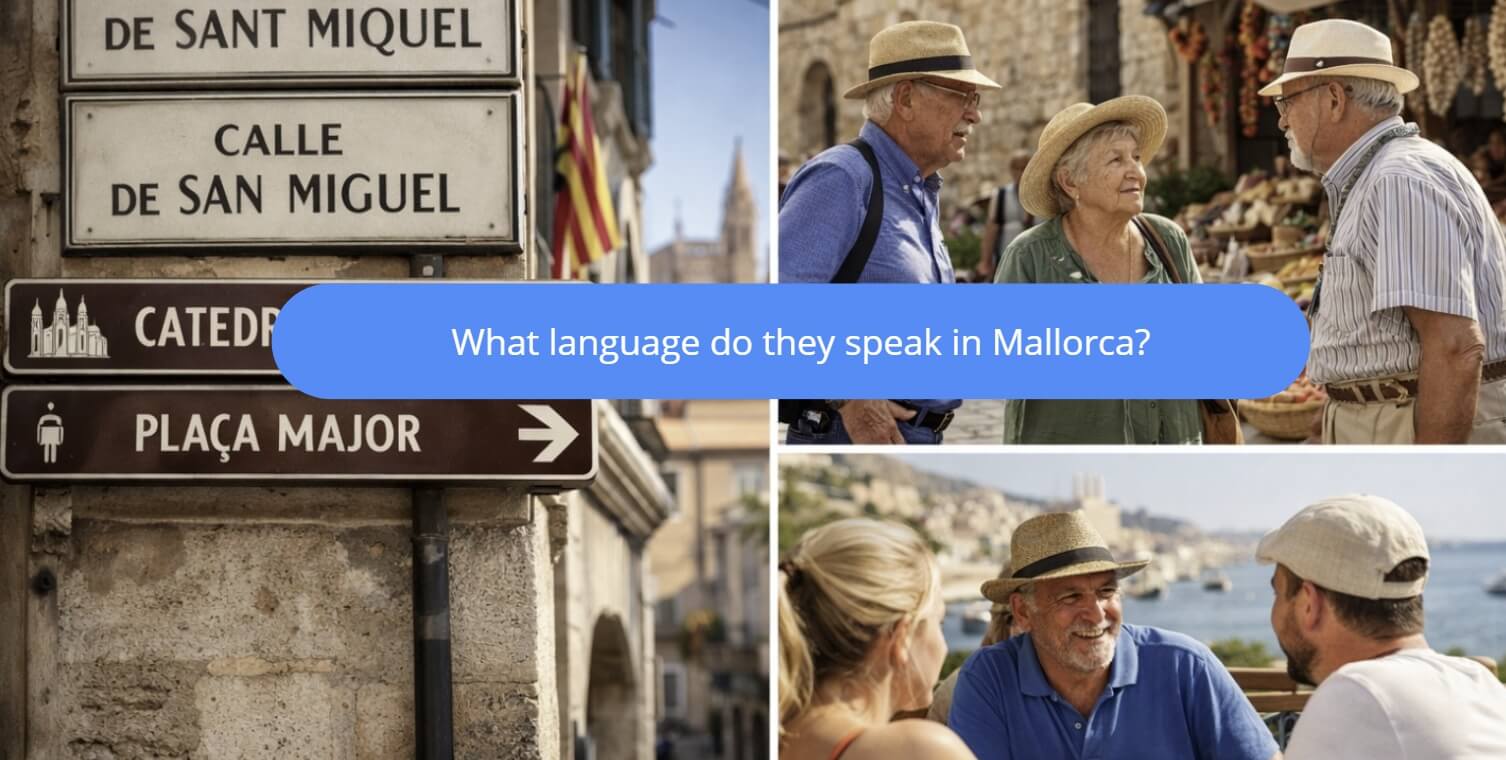
At the same time, Catalan is a co-official language and a key part of local identity. You’ll see it on road signs, public buildings, school names, and local menus. Many residents naturally switch between Spanish and Catalan depending on the situation.
As you travel around Mallorca, you’ll quickly notice bilingual signage in both Spanish and Catalan — from road signs and town halls to markets and public transport. This reflects how naturally both languages coexist in everyday life on the island.
Mallorquín: The Island’s Own Dialect
If you pay attention, you might notice that Catalan in Mallorca sounds a little different. That’s Mallorquín, the island’s local dialect.
Why Does Mallorca Have Its Own Dialect?
Mallorquín dates back to the 13th century, when King James I of Aragon (Jaume I) conquered the island and brought settlers from Catalonia. Over centuries, Mallorca’s geographical isolation helped shape a unique way of speaking, influenced by Catalan roots and historical layers from Arabic and Spanish.
This historical background is still visible today not only in language, but also in place names, architecture, and local traditions across the island — particularly in inland villages and rural areas where Mallorquín remains the primary spoken language.
Today, Mallorquín is a source of pride for locals and is commonly heard in villages, traditional festivals, and everyday conversations. Don’t worry though — Spanish and standard Catalan are perfectly understood everywhere.
Communication Tips for Visitors in Mallorca
This section is written by Lisa, originally from the UK, who has been living in Mallorca for over 20 years. Like many visitors, she arrived speaking only English — and over time learned Spanish, and even Catalan.
Living on the island, working with local businesses, and building a family life here has given her a unique perspective. Her partner is Mallorcan, and in everyday situations some family members naturally speak to her in Mallorquín.
Thanks to that experience, these tips are based on real-life situations — from ordering food and booking activities to chatting with locals in villages — and focus on what actually helps visitors feel comfortable communicating in Mallorca.
✔ In Tourist Areas
In popular resorts such as Alcúdia, Magaluf, and Palma, English is widely spoken. Hotels, restaurants, and tour operators work comfortably in English.
All Click Mallorca excursions and activities are offered in English, making communication easy from booking to the experience itself.
✔ With Locals
A simple greeting in Spanish or Catalan goes a long way. Locals really appreciate the effort, even if it’s just one word.
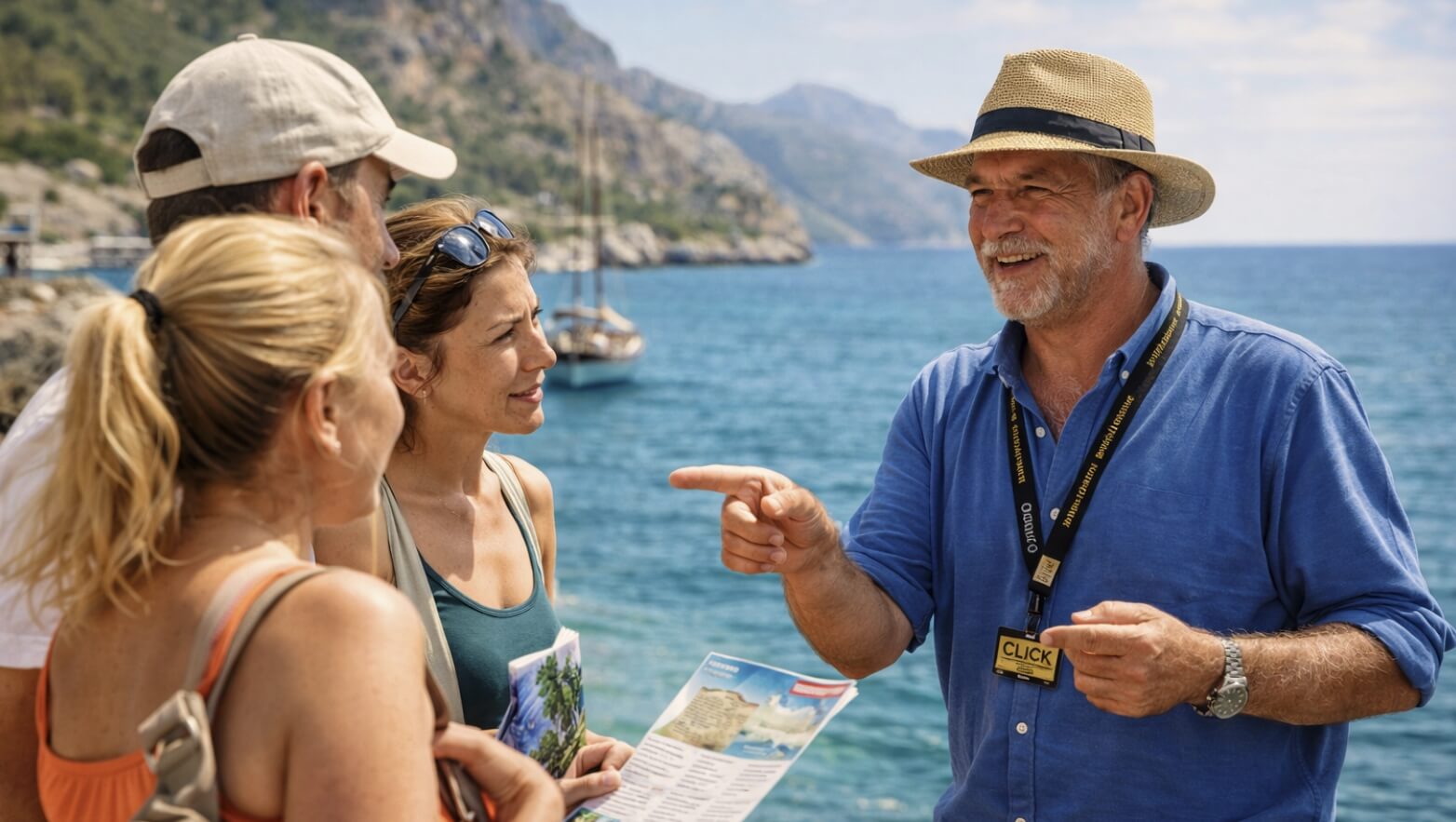
✔ Useful Phrases to Know
Catalan / Mallorquín
- Bon dia – Good morning
- Gràcies – Thank you
- Si us plau – Please
- Adéu – Goodbye
Spanish
- Hasta luego – See you later
- Buenos días – Good morning
- Gracias – Thank you
- Por favor – Please
Popular Mallorquín Expressions You Might Hear
Many of these expressions are part of everyday conversations you’ll hear in markets, cafés, village squares, and local festivals — especially outside the main tourist resorts. Even if you don’t speak Mallorquín, recognizing a few words helps you feel closer to the island’s rhythm and culture.
Before putting this list together, we did a bit of local brainstorming with our own team. Toni, who’s from Alcúdia, Marga from Inca, and Roxana from Sa Pobla all shared the expressions they actually use — or hear — in everyday life.
- “Au idò” – Probably the most famous Mallorquín expression. It can mean “okay then”, “let’s do it”, or simply mark the end of a conversation. Very versatile and very local.
- “Idò” – Similar to “well…” or “so…”. Often used to start or finish a sentence.
- “Va bé” – “All good” or “that’s fine”. A relaxed, positive response.
- “No passa res” – “No problem” or “don’t worry about it”. You’ll hear this a lot when things don’t go exactly to plan.
- “Què fas?” – “What are you doing?” A casual way to ask how someone is or what they’re up to.
- “Estar fet pols” – Literally “to be made of dust”, meaning to be very tired. You might feel this after a long beach day or hike.
- “Anar a fer un capfico” – To go for a quick swim or dive into the sea. A very Mallorcan expression, especially in summer.
- “Fer un cafetó” – To go for a coffee. Social and relaxed — coffee time in Mallorca is never rushed.
You don’t need to use these expressions yourself, but recognizing them adds an extra layer of connection with the local culture — and might even earn you a smile.
Excursions and Activities to Enjoy During Your Mallorca Holiday
We hope this guide has been useful and valuable in helping you understand the languages spoken in Mallorca and feel more confident when planning your trip. Our goal is always to answer the real questions travelers have before arriving on the island.
And once you’re here, don’t forget about us 😊
If you’re visiting Mallorca and would like to make the most of your holiday with excursions, activities, or unique experiences, we’d be happy to help.

At Click Mallorca, we work directly with local operators across the island to offer a wide range of activities, including:
- Boat trips along the coast and to hidden coves
- Dolphin watching excursions
- Guided bus tours and day trips
- Discounted tickets to Mallorca’s top attractions
- Water sports, cultural experiences, and much more
All our experiences can be easily browsed and booked online, with local support before and during your holiday.
TL;DR – Languages in Mallorca at a Glance
- Mallorca has two official languages: Spanish and Catalan
- The local dialect is called Mallorquín, a variant of Catalan
- English is widely spoken in tourist areas, hotels, restaurants, and excursions
- Learning a few words in Spanish or Catalan is appreciated but not essential
- Understanding the local language adds depth to your holiday experience
- For activities, excursions, boat trips, and attractions, you can easily book with Click Mallorca